
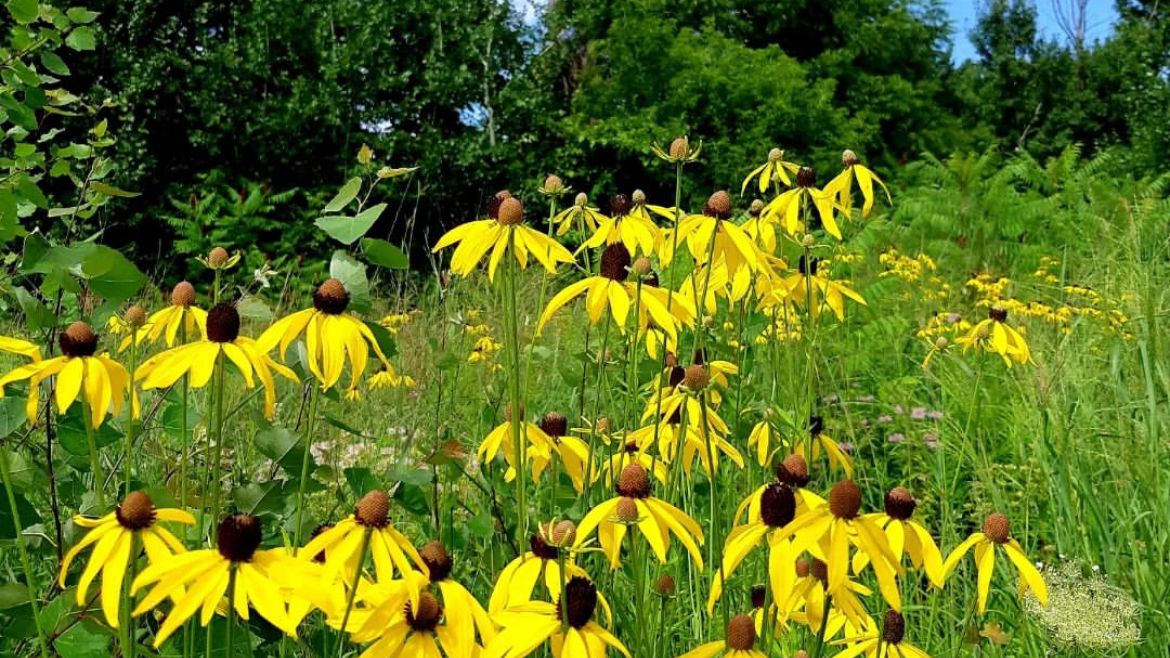
When people see a tallgrass prairie in the city, they sometimes ask, “Why is this here?” This question often comes up in the heat of summer, when there is little shade to be found.
You may wonder why it isn’t replaced with something neater or more familiar… perhaps trees instead.
The truth is, this prairie is doing more for our community than we might realize.
Tallgrass prairie is a vital part of the Carolinian ecosystem, one of the most biologically rich and most threatened ecosystems in Canada. Less than one percent of it remains. That means what we have here isn’t excess land or unused space; it’s rare, and it matters.
This prairie is alive. It supports pollinators such as native bees and butterflies that our food systems and gardens depend on. It also provides habitat for birds and insects that cannot survive in mowed lawns or ornamental plantings.
It works beneath our feet as well. Prairie plants send roots deep into the soil, holding it in place, absorbing stormwater, and improving soil health. This results in less erosion, reduced runoff, and greater resilience in the face of extreme weather – benefits every urban community needs. These plantings are self-sustaining, low-maintenance, and far more environmentally responsible than traditional turf grass, which requires constant mowing, watering, and chemical inputs.
Most importantly, this prairie tells a story. It reminds us what this land once was – and what it still can be. In a dense urban setting, it offers people the opportunity to connect with real, local nature, not just a decorative version of it.
If we remove this tallgrass prairie, we don’t just lose plants.
- We lose habitat.
- We lose resilience.
- We lose a rare piece of our natural heritage.
Keeping this prairie is not about letting things grow unchecked. It is about choosing restoration over replacement, function over appearance, and long-term benefit over short-term convenience.
Over the next few years, the Friends of Malcolmson Eco-Park will be restoring this area with additional native grasses and wildflowers, with the goal of reducing invasive species and supporting a greater diversity of pollinators. This prairie belongs here, and our city is stronger because of it.


